
Rotational Grazing for Beef Cattle: How TCR Does It
Rotational grazing means moving cattle to fresh pasture every few days instead of leaving them in one field all season. It's better for the soil, the grass, and the cattle. Here's how TCR uses rotational grazing and why it matters for the beef you're buying.
What Rotational Grazing Actually Is
Continuous Grazing
Traditional method
Cattle stay in the same large pasture all season. They graze wherever they want, often overgrazing favorite spots and ignoring others.
Problems:
- Cattle overgraze favorite plants, killing them
- Weeds thrive because they're not grazed
- Soil compaction in high-traffic areas
- Uneven grass growth and bare patches
- Parasites build up in heavily used areas
Rotational Grazing
TCR's method
Cattle are moved to a fresh section of pasture every few days. They graze intensively for a short period, then the pasture rests and regrows.
Benefits:
- Grass has time to recover between grazing
- Cattle always have access to fresh, nutritious forage
- Soil health improves from even manure distribution
- Weeds are controlled by more even grazing
- Lower parasite load (cattle move before reinfection)
How Rotational Grazing Works at TCR
Divide Pasture Into Paddocks
TCR's pasture is divided into smaller sections (paddocks) using temporary electric fencing. Each paddock is sized so cattle graze it for 2-4 days before moving.
Paddock size depends on herd size, grass growth rate, and season. In spring (fast growth), paddocks are larger. In summer (slower growth), paddocks are smaller.
Move Cattle Every Few Days
Cattle graze one paddock for 2-4 days, eating the grass down to about 4-6 inches. Then they're moved to the next paddock with fresh, tall grass.
The goal is to graze the grass before it gets too mature (tough and less nutritious) but not so short that it can't recover quickly.
Rest Period for Grass
After cattle move, the grazed paddock rests for 21-45 days (depending on season). During this rest, grass regrows, roots deepen, and soil biology recovers.
In spring, grass can recover in 21-28 days. In summer, it might take 35-45 days. TCR adjusts rotation speed based on grass growth.
Repeat the Cycle
Once all paddocks have been grazed, cattle return to the first paddock (which has now regrown). The cycle repeats throughout the grazing season.
In Oregon, the grazing season runs from March/April through October/November, depending on rainfall and grass growth.
Why Rotational Grazing Matters for Your Beef
Better Nutrition for Cattle
Cattle always have access to fresh, young grass—which is more nutritious than overgrazed or mature grass. Young grass has:
- Higher protein content
- More digestible energy
- Studies suggest a better omega-3 fatty acid profile
- May contain more vitamins and minerals
Impact on your beef: Better-nourished cattle = healthier, better-tasting beef.
Healthier Soil
Rotational grazing improves soil in several ways:
- Even manure distribution acts as natural fertilizer
- Hoof action breaks up soil surface (in moderation)
- Grass roots grow deeper during rest periods
- Soil organic matter increases over time
Impact on your beef: Healthy soil = healthier grass = healthier cattle.
Lower Parasite Load
Cattle move before parasite larvae (from their own manure) can reinfect them. Most parasite larvae die or become non-infective after 21+ days.
- Cattle aren't grazing near old manure
- Reduces need for chemical dewormers
- Lower stress on cattle immune systems
Impact on your beef: Healthier cattle, fewer interventions.
More Consistent Pasture Quality
Rotational grazing prevents overgrazing in some areas and undergrazing in others. All grass gets grazed and rested evenly.
- No bare patches or compacted areas
- Weeds are controlled naturally
- Pasture stays productive longer into the season
Impact on your beef: Cattle eat a more consistent, higher-quality diet throughout the year.
Environmental Benefits of Rotational Grazing
Why It's Better for the Land
Rotational grazing mimics how wild herbivores (bison, elk, deer) naturally graze: they graze intensively, then move on. The land gets a recovery period.
Key Environmental Wins:
- Deeper root growth: Rest periods between grazing allow grass roots to grow deeper, which is associated with improved soil health
- Water retention: Better soil structure from deeper roots can hold more water (less runoff, erosion)
- Plant diversity: Rotating grazing pressure gives a wider variety of plants a chance to thrive
- No synthetic fertilizer: Manure distribution acts as natural fertilizer
- Erosion control: Consistent grass cover protects soil from rain and wind
We're not claiming our beef is "carbon-neutral"—we haven't measured that. But these practices are a lot better for the land than feedlot production or continuous overgrazing.
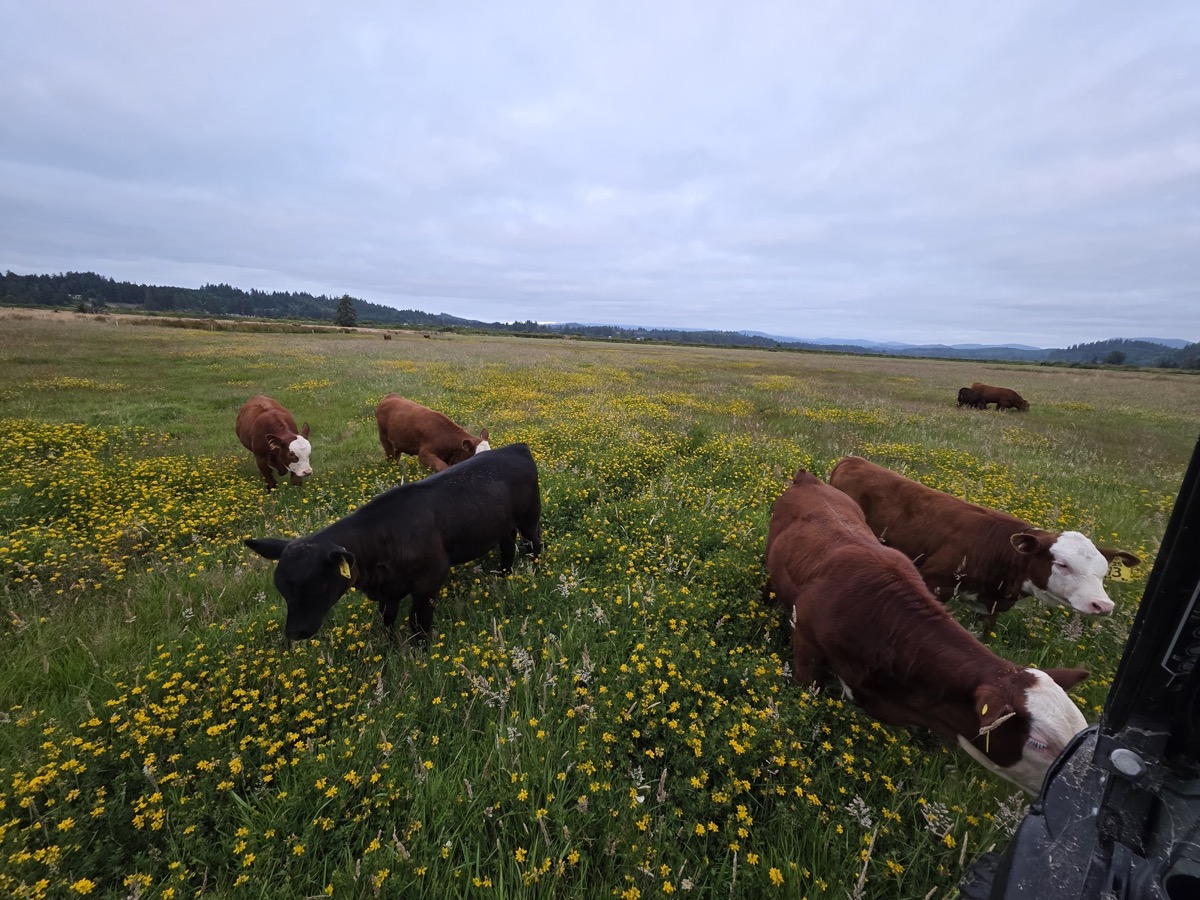
The Work Behind Rotational Grazing
More Labor-Intensive
Moving cattle every few days requires daily attention. You can't just turn cattle out in spring and forget about them until fall.
Why ranchers do it anyway: Because the benefits (healthier cattle, better pasture, lower input costs) outweigh the extra labor.
Requires Infrastructure
Rotational grazing needs temporary fencing, water access in each paddock, and a plan for moving cattle efficiently.
TCR uses portable electric fencing and moves water troughs as needed. It's not complicated, but it's not free.
Learning Curve
You need to understand grass growth rates, when to move cattle, how long to rest paddocks, and how to adjust for weather.
It takes a few seasons to dial in the timing. TCR has been doing this for years, so the system is refined.
Not Always Profitable at Scale
Large feedlots don't use rotational grazing because it doesn't scale. It works for small ranches like TCR but not for operations with 10,000+ cattle.
This is why grass-fed and pasture-raised beef costs more. The production method is inherently smaller-scale.
Rotational Grazing vs. Feedlot vs. Continuous Grazing
Rotational Grazing
TCR's method
- Cattle moved every 2-4 days
- Fresh grass always available
- Low parasite load
- Pasture condition improves over time
- Higher labor, lower input costs
- Works for small-scale operations
Continuous Grazing
Traditional pasture
- Cattle stay in same field all season
- Uneven grazing (overgrazing in spots)
- Higher parasite load
- Soil compaction in high-traffic areas
- Lower labor, but pasture degrades
- Common in traditional ranching
Feedlot
Conventional beef
- No grazing—cattle in confined pens
- Fed grain and hay (no fresh grass)
- High-density environment
- Antibiotics often used preventively
- Maximum efficiency, minimum land
- Used for 95-97% of US beef production
Common Questions
Does rotational grazing make beef taste better?
Indirectly, yes. Cattle eating fresh, nutritious grass are healthier and produce better-tasting beef. But the bigger impact is on beef quality and consistency, not a dramatic flavor difference.
Is rotational grazing the same as "regenerative agriculture"?
Rotational grazing is a key component of regenerative agriculture, but they're not identical. Regenerative ag includes other practices like cover cropping, no-till, and biodiversity management. TCR uses rotational grazing as part of a broader focus on soil health.
How often are cattle actually moved?
At TCR, typically every 2-4 days during the grazing season (spring through fall). In spring (when grass grows fast), moves might be every 3-4 days. In summer (slower growth), every 2-3 days.
Can you do rotational grazing in winter?
In Oregon, grass growth slows or stops in winter. Cattle are typically fed hay during winter months (November-March), with limited or no grazing depending on weather.
Does rotational grazing work everywhere?
It works anywhere you have enough rainfall for consistent grass growth. In arid regions, you might need longer rest periods or larger paddocks. In wet regions (like Oregon), it's ideal.
Is this the same as "mob grazing" or "holistic grazing"?
Similar concept, different intensity. Mob grazing uses very high-density herds for very short periods (1 day or less). Rotational grazing at TCR is more moderate: 2-4 days per paddock, medium density.
Reserve Beef from Rotational Grazing
TCR's rotational grazing means healthier cattle, better pasture, and higher-quality beef. Reserve your beef share and taste the difference that proper pasture management makes.
Check Availability & Reserve